May 2026
A Final Reflection on Urban Change
By Terry Byrnes
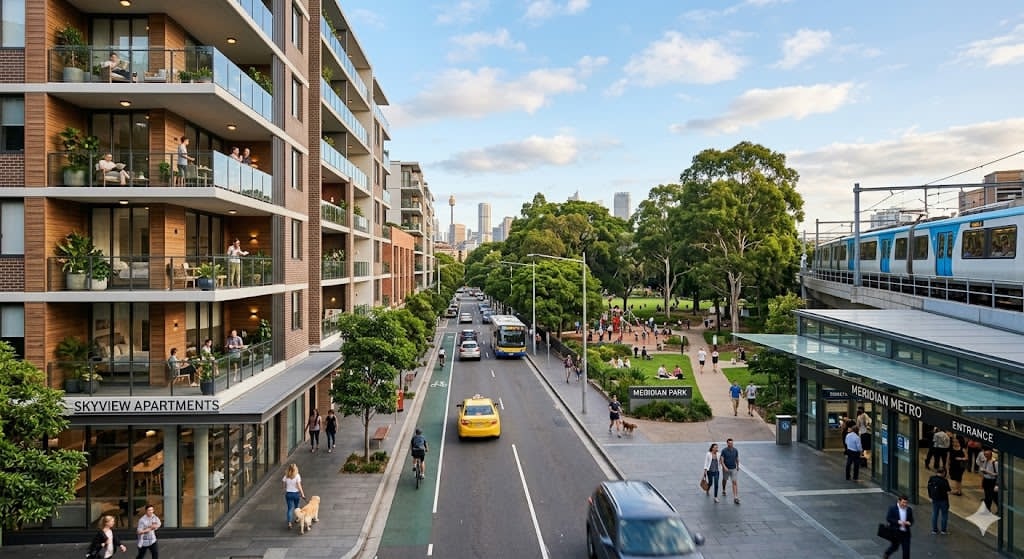
Disruptive as the current NSW Planning Minister’s intrusion on expected patterns of residential change may be, any comparison with Haussman’s need to facilitate cannon fire to control revolutionaries, and in the process create the Parisienne boulevards, might be a bit of a stretch. The question is, are we experiencing nothing more than the evolutionary process of urban change that societies have witnessed regardless of their historical motivations? Historically, the social patterns of the nuclear family and traditional childcare of the mid 20th century were altered by subtle changes such as the extension of retail trading hours and late night shopping, where access to shared resources became a feature of urban living. This retail change was a new manifestation of how we managed two income families and shared in the raising of children in the mutually available hours. Once decried for their lack of use, parks are being used for cricket games and all forms of open spaces and are enjoying far greater value than ever before. For many an excursion to the local café for a Saturday morning coffee now takes priority over any neighbourly game of cricket in the backyard or street.
Will the currently proposed dramatic urban residential changes lead to a further emphasis on the sharing of resources to the advantage of an even more urban lifestyle, in turn leading to greater emphasis on new forms of urban development? Will there be a greater priority for pedestrian over vehicular pathways? What will constitute common and private open space in an urban lifestyle that has evolved so far from the days of suburban chooks and chokos? Are these changes part of the inevitable drift from an Australian rural/suburban heritage society of the early 1900s to the cities?
The whole concept of personal privacy has changed from the time of Bob Hawke’s proposed introduction of an identity card, for example, to the acceptance of shared institutional data collected by tax authorities, banks and the health system. The notion of privacy, urban or otherwise, has also irrevocably changed and has been more easily accepted against the background of digital media and online communication.
As planners, our focus needs to be on understanding and appreciating that an apparently ad hoc vision of appropriate urban form is to be understood through a new lens, one of a more sharing society at the expense of a less private lifestyle. The apparently unanticipated disruptive intrusion of high-rise enclaves into a previously benign low-rise fabric should be seen as a message for the future. Unsettling as it may be to current understandings of status quo, there is a need to address a more shared orientation within society socially and to anticipate how to adapt the rigidities of built forms more appropriately.
Can we presume to ultimately recognise the Sydney of the future 15 to 20 years from now, given the nature of the Minister’s casual changes now being imposed on the urban landscape? If so, should future community plans provide greater emphasis on accommodating such an outcome?
Conversation